
Training at longer muscle lengths has garnered a lot of attention in the past few years. This study tested whether trained lifters could replace half of their long-length biceps training with a short-length curl without sacrificing growth or strength.
Overview
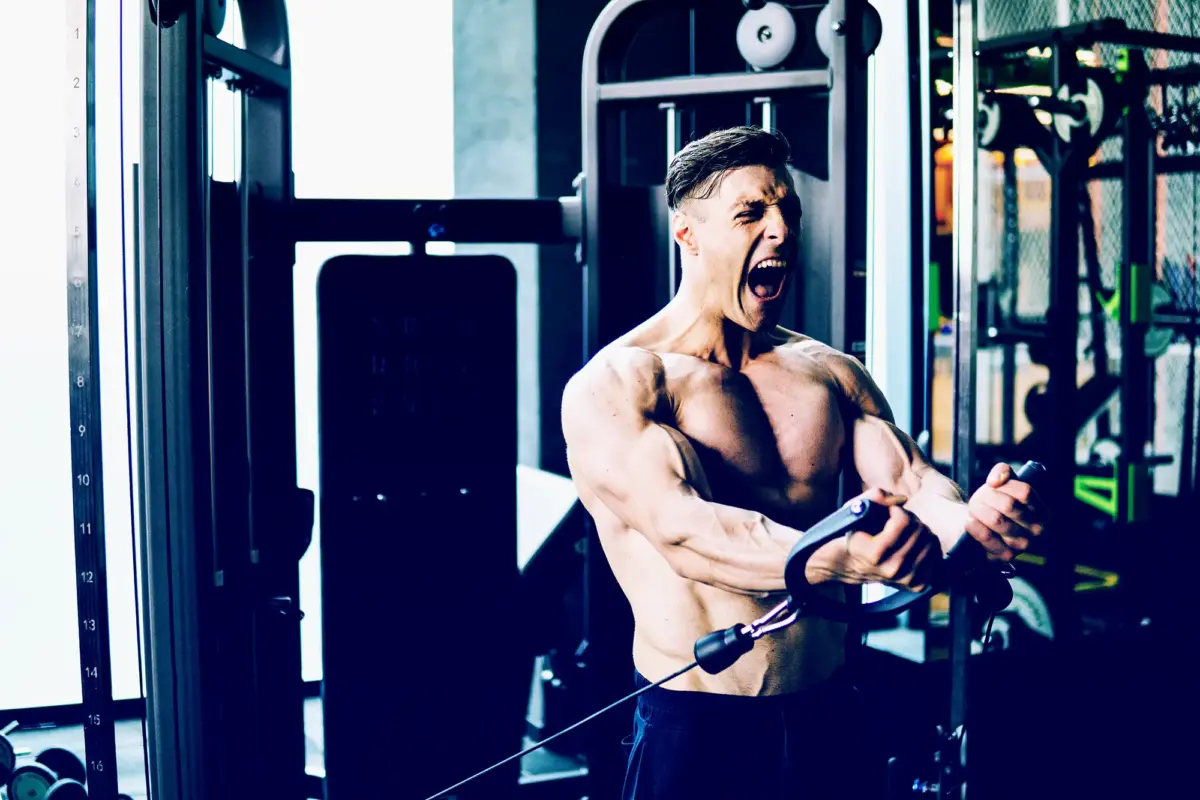
- What did they test? The researchers compared eight weeks of elbow-flexor training performed exclusively with a lengthened cable curl against an equal-volume program that divided training between lengthened and shortened cable curls.
- What did they find? Both conditions increased total biceps cross-sectional area and curl strength. However, there were no differences between conditions in muscle growth, dynamic strength, isometric strength, soreness, or session difficulty.
- What does it mean for you? You probably don’t need to perform every biceps set with an exercise that maximizes tension at long muscle lengths, but including some long-length training in your program while using exercises that challenge other portions of the range of motion is a reasonable approach.
What’s the Problem?
Training at longer muscle lengths has become a popular strategy for hypertrophy, with a recent meta-analysis suggesting that training a muscle in a stretched position may enhance growth 1. However, a recent study found no differences in biceps growth when comparing incline vs preacher curls, so there may be differences between specific exercises or muscle groups 2.
A mixed program could theoretically offer the best of both worlds by including enough long-length training to capture its potential hypertrophy benefits while retaining exercises that emphasize shorter muscle lengths. However, no research, until now, has directly compared this approach with performing all training at longer muscle lengths. The current study by Hinson and colleagues addresses this gap by testing whether trained lifters could replace half of their long-length curls with short-length curls without compromising muscle growth, strength, or recovery 3.
Purpose
The study compared the effects of training exclusively at longer muscle lengths (LONG) with mixed-length training (MIXED) on elbow-flexor growth, strength, soreness, and perceived fatigue.
Hypothesis
The authors hypothesized greater distal hypertrophy for the LONG group. They also hypothesized greater isometric and dynamic strength gains for LONG at longer muscle lengths and greater isometric and dynamic strength outcomes for MIXED at shorter muscle lengths - which fits with the principle of specificity. Further, they predicted lower markers of perceived soreness and fatigue for MIXED.
What Did They Test and How?
If you would like to continue reading...
Reps: A Biolayne Research Review
Only $12.99 per month
- Stay up to date with monthly reviews of the latest nutrition and exercise research translated into articles that are easy for anyone to understand.
- Receive a free copy of How To Read Research, A Biolayne Guide
- Learn the facts from simplified research
About the author

Brandon Roberts
Brandon Roberts serves as the Chief Science Officer at Tailored Coaching Method. He has a PhD in Muscle Biology, an MS in Human Performance, and a BS in Molecular Biology, along with over a decade of experience as a strength coach. He completed a prestigious NIH postdoctoral fellowship in Exercise Medicine and Nutrition at the...[Continue]
More From Brandon