
FROM THE STUDY
A new randomized trial compared a soy–pea protein blend with whey during 12 weeks of supervised resistance training. Both groups saw similar increases in muscle size and strength—but there’s an important caveat. The plant blend used here wasn’t a typical off-the-shelf product; it contained slightly higher leucine and essential amino acid content than whey. These comparable amino acid profiles likely explain the similar adaptations, highlighting that protein quality—not just protein source—influences muscle growth in response to training.
Overview
- What did they test? Young men completed a 12-week supervised resistance-training program and consumed either 15g of a soy–pea plant protein blend or whey protein three times per day (45 g/day total). The key comparison was whether matched-amino-acid protein sources—the plant blend had similar or slightly higher leucine and essential amino acid content than whey—would produce different effects on muscle growth and strength.
- What did they find? Both groups gained similar amounts of whole-body lean mass, appendicular lean mass, leg lean mass, vastus lateralis muscle CSA, and leg-press 1RM strength, with no significant between-group differences for any outcome.
- What does it mean for you? This study indicates that protein quality—especially leucine and total EAA content—plays a central role in influencing the magnitude of the anabolic response from resistance training, regardless of whether the protein comes from plant or animal sources. In this trial, the soy–pea blend appeared to augment hypertrophy and strength gains to a similar extent to whey because its amino acid profile closely matched, or slightly exceeded, that of the whey. However, most commercial plant proteins do not naturally provide this level of leucine or total EAAs, nor the digestibility typical of whey. Therefore, these findings should not be generalized to all plant proteins.
What’s the Problem?
Plant and animal proteins can differ substantially in their essential amino acid (EAA) content, leucine concentration, and digestibility, all of which influence the muscle protein synthetic response. Acute studies have shown inferior MPS responses to plant proteins such as soy or wheat compared with whey or milk 1 2, even when protein doses are matched. This evidence has stimulated ongoing debate about whether plant proteins can match the long-term hypertrophy and strength adaptations typically seen with animal-based proteins. Because plant and animal proteins tend to differ in these key qualities, the question remains: can plant proteins support muscle growth as effectively as animal proteins when total protein intake is adequate? And, perhaps matching amino acid profiles could eliminate these differences? This new study directly addresses that problem by comparing a soy–pea blend with a similar (slightly higher) leucine and EAA content to whey during a 12-week resistance training program.
Purpose
The purpose of this study was to investigate the effects of supplementary protein source (blend of plant-based [PLNT] vs. animal-based [ANML]) to habitual diet on changes in muscle mass and strength in healthy young men undertaking resistance training.
Hypothesis
The authors hypothesized that both protein sources would be equally effective in supporting muscle anabolism in response to resistance training.

If you would like to continue reading...
New from Biolayne
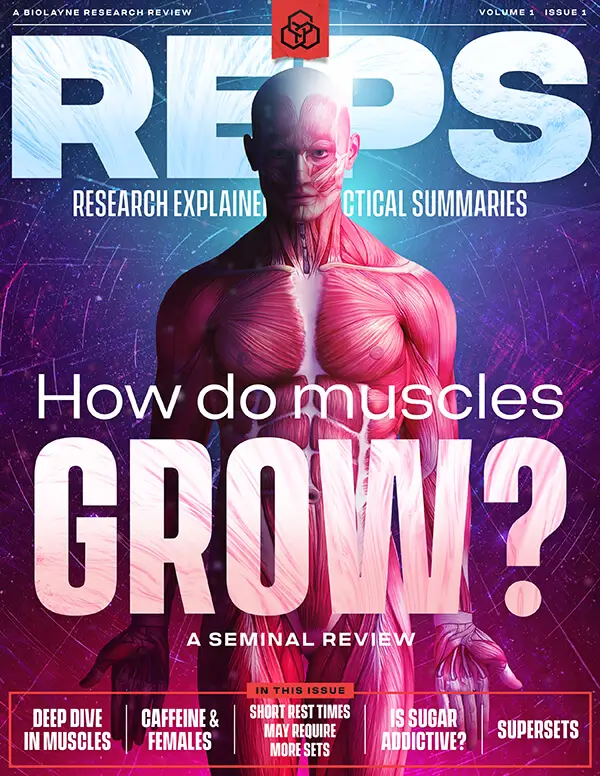
Reps: A Biolayne Research Review
Only $12.99 per month
- Stay up to date with monthly reviews of the latest nutrition and exercise research translated into articles that are easy for anyone to understand.
- Receive a free copy of How To Read Research, A Biolayne Guide
- Learn the facts from simplified research
Tags:
About the author

Cody Haun
Cody Haun completed his Bachelor's and Master's Degrees at East Tennessee State University where he studied Exercise and Sport Physiology alongside his work as a strength and conditioning coach. During this time, Cody developed a keen interest in physiology and nutrition. Cody went on to complete his PhD from Auburn University with a concentration in...[Continue]
More From Cody