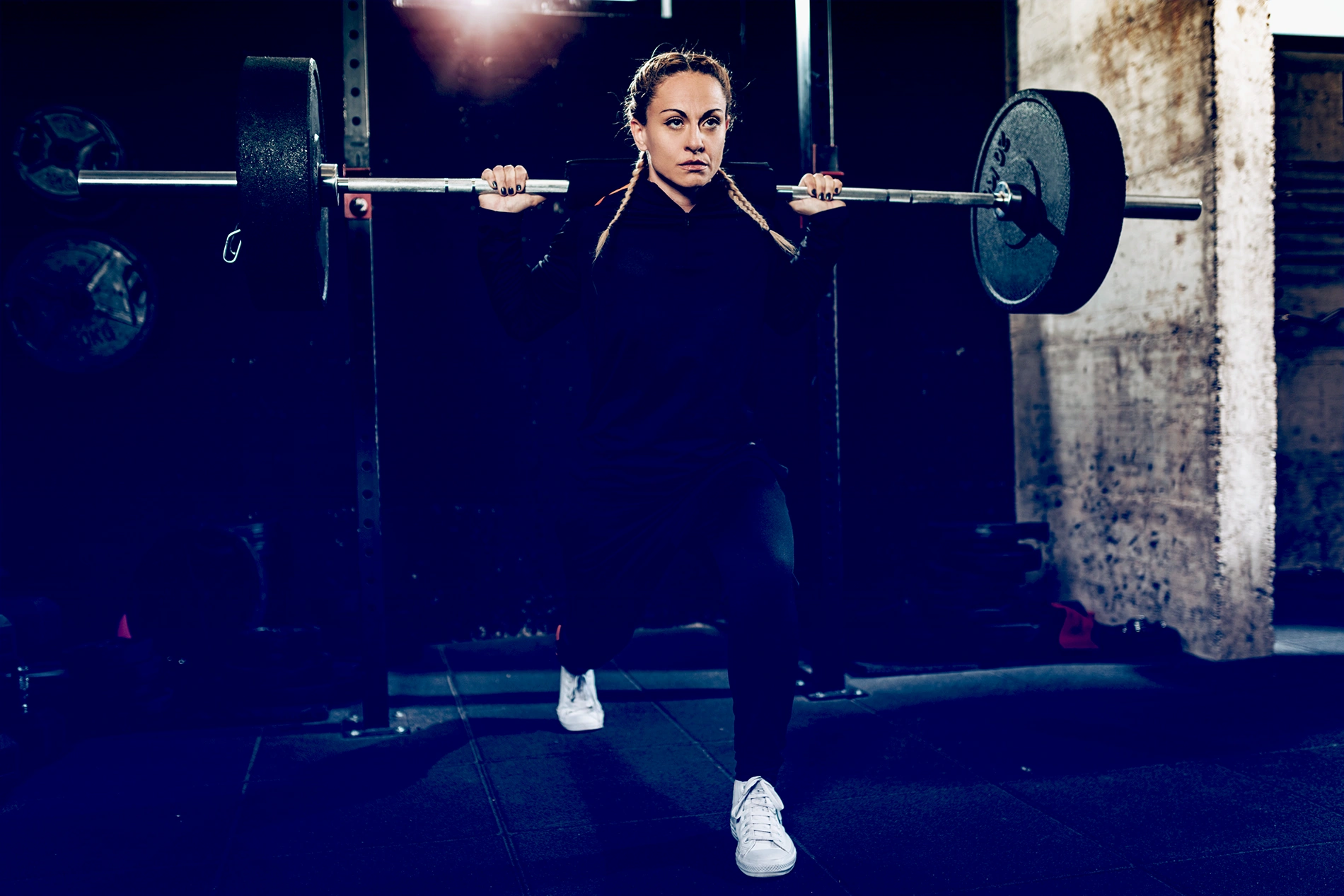
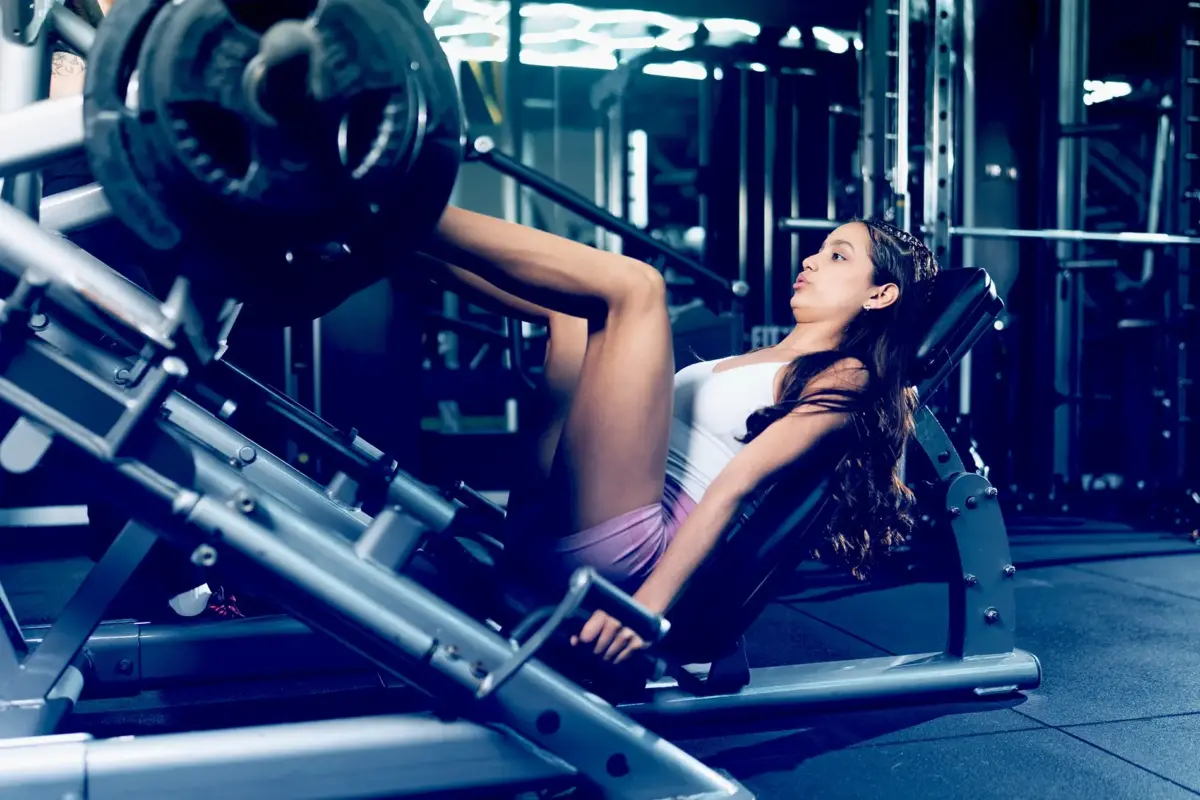
This study had untrained women complete nine weeks of unilateral quadriceps training using either a free-weight exercise (lunge) or a machine-based exercise (incline leg press) to compare muscle growth. Both exercises produced similar hypertrophy over the training period. Is this a one-off finding, or is it a myth that free weights are superior to machines for building muscle?
Overview
- What did they test? Eight untrained women completed nine weeks of unilateral leg training, performed three times per week. Using a within-subject design, each participant trained one leg with a free-weight exercise (lunge, FW) and the other with a machine-based exercise (incline leg press, MACH). Ultrasound measurements of the rectus femoris and vastus lateralis were taken at the proximal (50%) and distal (70%) regions to assess changes in muscle thickness.
- What did they find? Statistically significant increases in muscle thickness were observed for both training methods across all muscles and regions. Specifically, the rectus femoris increased by 10.7% and 8.9% at proximal, and by 24.8% and 27.3% at distal for the free-weight and machine-based exercises, respectively. The vastus lateralis increased by 13.3% and 12.1% at proximal, and by 12.7% and 15.7% at distal for the free-weight and machine-based exercises, respectively. No significant differences were found between the training approaches.
- What does it mean for you? When training for muscle growth, you can use either free weights or machines — both appear to be similarly effective for hypertrophy. The choice should come down to what’s most practical and enjoyable for you or your athletes. While this study focused on muscle size rather than strength, remember that strength adaptations are more task-specific, so exercise selection matters more when training for performance outcomes in a particular lift.
What’s the Problem?
I’ll admit up front that I have a personal bias toward training with free weights. I love the big compound lifts — squat, bench press, and deadlift — and I’ve even spent a few years competing and coaching in Olympic weightlifting. My focus has almost always been chasing strength in specific barbell-based movements. But the question we’re looking at today is different. It isn’t about strength outcomes — it’s about muscle growth.
With that out of the way, this month’s article tackles a topic we’ve all seen debated: whether free weights are better for muscle growth than machine-based training. You’ve probably heard arguments on both sides. Advocates for free weights often point to the added stability demands and greater overall muscle activation 1, while supporters of machine-based training argue that it allows better focus on the target muscles, potentially enhancing the training stimulus.
In Issue 16 of the REPS Review, we covered a meta-analysis comparing free weights with machines for muscle growth, strength, and power. In that article by Heidel et al. 2, the key takeaway was that if your goal is to get stronger in a specific exercise, you should train that exercise. But when it comes to building muscle, free weights don’t appear to produce superior results.
This month, we’ll take a closer look at the new study in question and explore how it fits within the latest research on the topic. Let’s get into it.
Purpose
The study aimed to compare the effects of training with free-weight and machine-based exercises on muscle hypertrophy, measured by ultrasound in two quadriceps muscles at two distinct regions of each muscle in untrained women.