Building muscle doesn’t happen in the gym alone. In Part 2 of this series, I break down the nutrition and supplementation variables that actually matter for maximizing muscle growth and which ones are overhyped or misunderstood.
We start with protein: how much you really need, why protein quality matters, the role of essential amino acids and leucine in stimulating muscle protein synthesis, and how protein distribution across the day can influence results. I also dive into how protein needs change with age, why older adults require higher per-meal and daily protein intakes, and practical recommendations to offset age-related anabolic resistance.
From there, we cover energy intake: how caloric deficits impair muscle protein synthesis, why massive surpluses don’t accelerate lean mass gains in trained lifters, and how to think about maintenance versus small surpluses depending on training status.
Finally, I break down the supplements that are actually supported by strong evidence — including creatine and whey protein: what they do, how they work, and how to use them effectively. We also cover common factors that can sabotage muscle growth, like smoking, excessive alcohol, poor sleep, and inappropriate use of NSAIDs or high-dose antioxidants.
If you want a clear, science-based framework for using nutrition and supplements to support muscle growth, without gimmicks or misinformation, then this episode is for you.
Nutrition
Protein
- Dietary protein intake has been demonstrated to increase muscle protein synthesis (MPS) & high protein diets above the RDA (>0.8g/kg body weight) have been demonstrated to increase lean body mass (LBM) more than RDA levels of protein. 1
- Proteins are long chains of amino acids that fold into 3 dimensional structures based on their amino acid sequences & these shapes give them their biological activity
- Dietary protein is unique as a macronutrient as it is the only macronutrient containing nitrogen. The unique structure of nitrogen & the way bonds can be arranged with it is what enables amino acids to be able to create these unique 3D structures
- There are 20 amino acids (there are other derivatives but there are 20 that are considered as dietary amino acids), 11 of which are non-essential amino acids (NEAAs), meaning the body can endogenously create them. There are 9 essential amino acids (EAAs) which we must intake through the diet.
- Amongst the EAAs, the Branched Chain Amino Acids (BCAAs) Leucine, Isoleucine, & Valine are unique in several aspects, the first of which is they can be directly metabolized in skeletal muscle. 2
- Leucine is unique in that it is the single amino acid that appears responsible for stimulating MPS in response to meal protein intake. 3
- Research has demonstrated that the leucine content of protein sources predicts their effects on MPS. 4
- Amongst the EAAs, the Branched Chain Amino Acids (BCAAs) Leucine, Isoleucine, & Valine are unique in several aspects, the first of which is they can be directly metabolized in skeletal muscle. 2
- The breakpoint of high protein diets to maximize muscle mass appears to be around 1.6g/kg body weight per day in the most recent meta-analysis (confidence interval is up to 2.4g/kg however). 5
- There are other meta-regressions indicating that protein benefits may be dose-dependent without a hard cap but rather diminishing returns even up to 3.5g/kg body weight.6
- Daily protein intake should be selected based on your specific goals
- Protein distribution
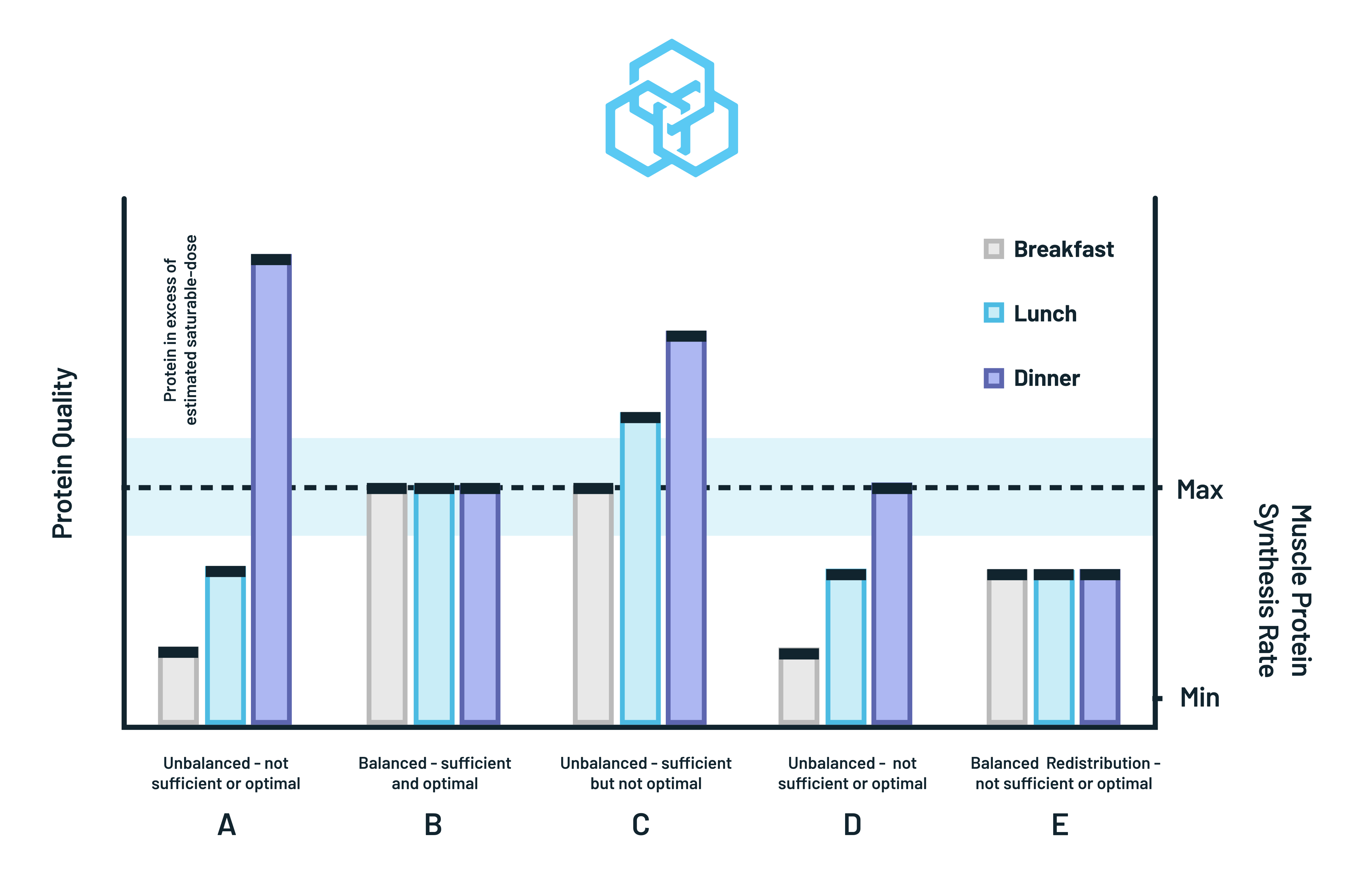
- While total daily protein intake is the most important thing, there is evidence that how you distribute protein matters, especially with breakfast. 7 8 9 10 11
- There is no storage for dietary protein & thus you can’t make up for low protein at one meal by overeating it at another meal since approximately 20-40g at a meal maximizes MPS in healthy adults. The exact amount depends on the leucine content and bioavailability of the protein source. 11
- Once triggered, protein synthesis runs around 2-4 hours. Eating more protein does not appear to extend this duration nor does constant infusion of amino acids. 12 13 14
- Most Americans consume ~65% of their protein at dinner. This suggests they overconsume it at dinner but likely underconsume it at breakfast & possibly lunch. 15
- Research has demonstrated that greater daily protein/leucine intakes sufficient to stimulate MPS are associated with increased LBM. 16
- Compared to people consuming low protein breakfast, consuming a high protein breakfast appears to increase LBM even at same total daily protein intake. 10
- More even distribution of protein appears to lead to greater total MPS over a week. 7
- My own tightly controlled research in rodents demonstrated an increase in hindlimb muscle weights with a relatively evenly distributed protein intake (29:29:42) relative to a skewed protein distribution (15:15:70) even with the exact same protein source & total protein intake. 8
- The overall effect of distribution is small & total daily protein intake is far more important.
- Recommendations are 3-5 meals per day with sufficient protein/leucine to maximize MPS
Figure 1
- Age related protein intake
- There is an age related decline in muscle mass known as sarcopenia starting around age 40 resulting in a progressive loss of muscle mass of around ~1% per year but can accelerate with aging if not addressed. 18
- Sarcopenia is associated with a loss of the sensitivity to nutrient anabolic stimuli. While basal rates of MPS do not change with age, meal MPS responses are impaired. Elderly individuals can get the same anabolic response to a meal but require a greater amount of protein/EAAs/leucine at a meal to achieve the full response. 19 20 21 22 23
- Compared with 28 year olds, 68 year olds required 65% more leucine (2.8g vs 1.7g) to maximally stimulate MPS. 3
- Compared with 21 year olds, 71 year olds may require up to 40g of whey protein at meal (0.49g/kg) to maximally stimulate MPS vs. 21 year olds which can maximize MPS at 20g whey protein at a meal (0.24g/kg), a 104% difference. 2 4
- Elderly aged 71 required 0.40g/kg at a meal to maximize MPS whereas young (22 years old) individuals maximized MPS at a meal with 0.24g/kg, a 67% difference. 5
- 30g beef protein (0.38g/kg) is sufficient to maximize MPS in the young (34 years old), but older men (59 years old) required 36g of beef protein (0.44g/kg) to maximize MPS after resistance training, a 15% difference. 24 25
- This suggests a decline in the sensitivity of the anabolic response to protein of approximately 0.6-2.1% per year. As such, my recommendation is to add 2% protein per year after age 40, or 20% per decade.
- Example: Assuming a 80kg person was consuming 1.6g/kg, that is ~130g protein/day. For someone aged 50 years old, I’d recommend increasing this by 20%. 1.6 x 0.2 = 0.32. 1.6 + 0.32 = ~1.9g/kg
Table 1. Estimated protein intakes in g/kg of body weight to optimize lean mass based on age.
| AGE | <40 | 40-49 | 50-59 | 60-69 | 70-79 | >80 |
|---|---|---|---|---|---|---|
| Protein (g/kg BW) | 1.6g/kg BW | 1.9g/kg BW | 2.2g/kg BW | 2.5g/kg BW | 2.8g/kg BW | 3.1g/kg BW |
Unfortunately, grams of protein per kg of body weight can be deceiving since body fat does not have hardly any protein requirement, the most accurate way to assess protein intakes is based on g/kg of LBM but quite a few people can get confused by how much LBM they have and how to properly assess it. If you’re a nerd like me and have a good idea of this number it’s fine to use, but g/kg body weight is also completely fine.
Table 2. Estimated protein intakes in g/kg of lean body mass to optimize lean mass based on age.
| AGE | <40 | 40-49 | 50-59 | 60-69 | 70-79 | >80 |
|---|---|---|---|---|---|---|
| Protein (g/kg BW) | 1.8g/kg BW | 2.2g/kg LBM | 2.6g/kg BW | 3.0g/kg LBM | 3.4g/kg LBM | 3.8g/kg BW |
- Protein Quality
- Animal protein tends to be higher quality than plant protein
- Better bioavailability because much of the protein in intact plant proteins is bound up in the fibrous material of the plant and inaccessible to digestive enzymes. 26
- Cooking plant protein can increase it’s bioavailability
- Isolated plant proteins have similar bioavailability to animal protein since the protein has been separated from the fibrous material of the plant. 27
- Animal protein also tends to have a better protein digestibility corrected amino acid score (PDCAAS) compared to plant proteins
- Proteins like wheat gluten can be as low as 0.25, whereas soy isolate is 1.0 (the highest score) whereas most animal proteins are at least a 0.9. 28
- Animal protein also tends to have a higher concentration of leucine compared to plant proteins
- Leucine content of animal proteins is usual 7.5-9% of the protein content, whey is as high as 11-12%. 29
- Most plant proteins are <8% leucine with some as low as 5%. Corn is very high at 13% but also very deficient in other EAAs. Soy is similar at 8% and also has an overall good amino acid profile. 12
- The difference in protein quality is most important at low protein intakes. However, at high protein intakes it appears to make little to no difference as once protein intake reaches a high level, even plant protein is sufficient to maximize MPS. 30 31 32
- For elderly however, even a ‘high’ (20g) dose of plant protein may not fully stimulate MPS compared to a source like whey. 33
- While overall studies favor animal protein slightly for increasing LBM, long term LBM outcomes are similar between animal based protein sources and plant based protein sources when total protein intake is high enough. 34 35 36 37
- Better bioavailability because much of the protein in intact plant proteins is bound up in the fibrous material of the plant and inaccessible to digestive enzymes. 26
- Animal protein tends to be higher quality than plant protein
Energy Intake
- Building muscle through MPS is an energetically expensive process and requires ATP. 38
- Adding body weight requires an energy surplus. 39
- Energy deficits reduce basal levels of MPS by ~15-30% and the reduction in MPS appears to be proportionate to the energy deficit (larger deficit = greater decrease in MPS). 40 41 42
- Energy deficits of greater than 500 kcal per day appear to impair the anabolic response to resistance training. 43
- A large energy surplus does not appear to further enhance lean mass gains in response to resistance training however. 26
- Overfeeding by either ~45% above maintenance or 95% above maintenance produced similar gains in muscle mass, though the larger surplus gained more body fat. 44
- A 500 kcal surplus (~17% above maintenance) increased LBM 0.5kg vs. eating at maintenance but also caused more fat gain in elite athletes. 45
- In trained lifters eating at maintenance, a 5% surplus, or a 15% surplus resulted in similar gains in muscle, though there was a trend towards slightly increased biceps mass with a surplus and bench press 1-RM strength was increased more with the 15% surplus. 46
- A ~650 kcal surplus in resistance trained men resulted in almost exclusive body weight gain from LBM when weight gain was 0.55% per week or less. 47
- Untrained men consuming an extremely large surplus of 2000 kcal/day gained almost exclusively lean mass over 8 weeks. 48
- For untrained individuals, larger surpluses may not result in much fat gain, however for trained individuals, it appears only maintenance or a small surplus is required for building muscle.
Supplements
Creatine Monohydrate
- Increases LBM and strength through multiple mechanisms
- Increases the synthesis of contractile proteins myosin and actin. 49
- May stimulate mTOR in vivo. 50
- It is an osmolyte that pulls water into muscle cells. 51
- May increase satellite cell fusion & increase number of myonuclei. 52
- Increases training capacity allowing for increased adaptation. 53
- How to use it
- 5-10g/day continuously
- 20g/day for 5 days followed by maintenance doses of 3-5g/day
Whey Protein
- Very high quality protein source that is highly bioavailable. Perfect PDCAAS score & very high in leucine (>11% of protein).
- Increases MPS in humans.
- Increases lean mass. 54
- Increases strength
- How to use it?
- 20g+ at a serving when high quality protein is needed
Ashwagandha
- Plant that contains plant steroids called withanolides
- Supplementation with ashwagandha dervied withanolides has been demonstrated to:
- Improve strength. 55
- Increase lean mass. 56 57
- Increase testosterone modestly. 55
- Decrease cortisol. 55
- Improve sleep. 58
- Decrease stress. 59
- Improve recovery and decrease soreness. 57
- Reduce inflammation. 60
- Improve cognition. 61
Things to avoid
Smoking
- Decreases muscle protein synthesis, strength, & possibly and lean mass. 62 63 64
Alcohol
- Moderate drinking (up to ~5 drinks) does not impede resistance training or exercise adaptations, affect body composition, or impact sex hormones. 65 66 67 68 69
- Binge drinking significantly impairs MPS, reduces testosterone, and negatively impacts recovery. 70 71 72
Non-Steroidal Anti-Inflammatories (NSAIDs) and high dose anti-oxidants
- Inflammation and reactive oxygen species are involved in the muscle remodeling response to resistance exercise. 73 74
- High dose NSAIDs (1200mg ibuprofen/day) decrease the growth response to resistance training in young adults. 75
- NSAIDs (4000mg acetaminophen/day) increased muscle growth in older adults (~64 years old), indicating there is an optimal level of inflammation for muscle hypertrophy to occur. 76 77
- Modest doses of NSAIDs (~400-800mg ibuprofen) do not appear to negatively affect muscle growth in adults. 78
- High doses of anti-oxidants like vitamin E (400 IU/day) and vitamin C (1000mg/day) appear to negatively impact muscle hypertrophy possibly by impairing cellular anabolic signaling like p70S6K. 79 80
Sleep deprivation
- No sleep decreased MPS by 18% and testosterone by 24% after a single night of no deprivation. 81
- Moderate sleep restriction (5 hours/night) did not appear to negatively impact muscle mass or strength. 82
References
- Protein Intake Greater than the RDA Differentially Influences Whole-Body Lean Mass Responses to Purposeful Catabolic and Anabolic Stressors: A Systematic Review and Meta-analysis
- Branched-chain Amino Acids: Catabolism in Skeletal Muscle and Implications for Muscle and Whole-body Metabolism
- The role of leucine in the regulation of protein metabolism
- Leucine content of dietary proteins is a determinant of postprandial skeletal muscle protein synthesis in adult rats
- Systematic review and meta‐analysis of protein intake to support muscle mass and function in healthy adults
- Dose–response relationship between protein intake and muscle mass increase: a systematic review and meta-analysis of randomized controlled trials
- Dietary protein distribution positively influences 24-h muscle protein synthesis in healthy adults
- Meal Distribution of Dietary Protein and Leucine Influences Long-Term Muscle Mass and Body Composition in Adult Rats1
- Effect of breakfast protein intake on muscle mass and strength in adults: a scoping review
- Evenly Distributed Protein Intake over 3 Meals Augments Resistance Exercise–Induced Muscle Hypertrophy in Healthy Young Men
- How much protein can the body use in a single meal for muscle-building? Implications for daily protein distribution
- Latency and duration of stimulation of human muscle protein synthesis during continuous infusion of amino acids
- Muscle full effect after oral protein: time-dependent concordance and discordance between human muscle protein synthesis and mTORC1 signaling
- The leucine content of a complete meal directs peak activation but not duration of skeletal muscle protein synthesis and mammalian target of rapamycin signaling in rats
- Circadian rhythms of the spontaneous meal pattern, macronutrient intake, and mood of humans
- Per meal dose and frequency of protein consumption is associated with lean mass and muscle performance
- Protein Distribution and Muscle-Related Outcomes: Does the Evidence Support the Concept?
- An overview of sarcopenia: facts and numbers on prevalence and clinical impact
- Anabolic signaling deficits underlie amino acid resistance of wasting, aging muscle
- Resistance exercise enhances myofibrillar protein synthesis with graded intakes of whey protein in older men
- A high proportion of leucine is required for optimal stimulation of the rate of muscle protein synthesis by essential amino acids in the elderly
- Myofibrillar muscle protein synthesis rates subsequent to a meal in response to increasing doses of whey protein at rest and after resistance exercise
- Protein ingestion to stimulate myofibrillar protein synthesis requires greater relative protein intakes in healthy older versus younger men
- Dose-dependent responses of myofibrillar protein synthesis with beef ingestion are enhanced with resistance exercise in middle-aged men
- Moderating the portion size of a protein-rich meal improves anabolic efficiency in young and elderly
- Determinants of amino acid bioavailability from ingested protein in relation to gut health
- Combining Plant Proteins to Achieve Amino Acid Profiles Adapted to Various Nutritional Objectives—An Exploratory Analysis Using Linear Programming
- The Role of the Anabolic Properties of Plant- versus Animal-Based Protein Sources in Supporting Muscle Mass Maintenance: A Critical Review
- Where to Find Leucine in Food and How to Feed Elderly With Sarcopenia in Order to Counteract Loss of Muscle Mass: Practical Advice
- Leucine content of dietary proteins is a determinant of postprandial skeletal muscle protein synthesis in adult rats
- The leucine content of a complete meal directs peak activation but not duration of skeletal muscle protein synthesis and mammalian target of rapamycin signaling in rats
- The effects of whey, pea, and collagen protein supplementation beyond the recommended dietary allowance on integrated myofibrillar protein synthetic rates in older males: a randomized controlled trial
- Myofibrillar protein synthesis following ingestion of soy protein isolate at rest and after resistance exercise in elderly men
- Animal Protein versus Plant Protein in Supporting Lean Mass and Muscle Strength: A Systematic Review and Meta-Analysis of Randomized Controlled Trials
- Effect of Plant Versus Animal Protein on Muscle Mass, Strength, Physical Performance, and Sarcopenia: A Systematic Review and Meta-analysis of Randomized Controlled Trials
- No Difference Between the Effects of Supplementing With Soy Protein Versus Animal Protein on Gains in Muscle Mass and Strength in Response to Resistance Exercise
- Vegan and Omnivorous High Protein Diets Support Comparable Daily Myofibrillar Protein Synthesis Rates and Skeletal Muscle Hypertrophy in Young Adults
- Nutrition and muscle protein synthesis: a descriptive review
- The Effects of Overfeeding on Body Composition: The Role of Macronutrient Composition – A Narrative Review
- Reduced resting skeletal muscle protein synthesis is rescued by resistance exercise and protein ingestion following short-term energy deficit
- Pronounced energy restriction with elevated protein intake results in no change in proteolysis and reductions in skeletal muscle protein synthesis that are mitigated by resistance exercise
- Acute energy deprivation affects skeletal muscle protein synthesis and associated intracellular signaling proteins in physically active adults
- Energy deficiency impairs resistance training gains in lean mass but not strength: A meta-analysis and meta-regression
- Effects of Different Dietary Energy Intake Following Resistance Training on Muscle Mass and Body Fat in Bodybuilders: A Pilot Study
- Effect of nutritional intervention on body composition and performance in elite athletes
- Effect of Small and Large Energy Surpluses on Strength, Muscle, and Skinfold Thickness in Resistance-Trained Individuals: A Parallel Groups Design
- Predicting Adaptations to Resistance Training Plus Overfeeding Using Bayesian Regression: A Preliminary Investigation
- Effects of high-calorie supplements on body composition and muscular strength following resistance training
- SPECIFICITY OF CREATINE IN THE CONTROL OF MUSCLE PROTEIN SYNTHESIS
- Creatine Supplementation and Skeletal Muscle Metabolism for Building Muscle Mass- Review of the Potential Mechanisms of Action
- The Effect of Creatine Supplementation on Lean Body Mass with and Without Resistance Training
- Creatine supplementation augments the increase in satellite cell and myonuclei number in human skeletal muscle induced by strength training
- Creatine Supplementation for Muscle Growth: A Scoping Review of Randomized Clinical Trials from 2012 to 2021
- Effectiveness of Whey Protein Supplementation during Resistance Exercise Training on Skeletal Muscle Mass and Strength in Older People with Sarcopenia: A Systematic Review and Meta-Analysis
- Effects of Ashwagandha (Withania somnifera) on Physical Performance: Systematic Review and Bayesian Meta-Analysis
- Effects of Ashwagandha ( Withania somnifera) standardized root extract on physical endurance and VO 2max in healthy adults performing resistance training: An eight-week, prospective, randomized, double-blind, placebo-controlled study
- Examining the effect of Withania somnifera supplementation on muscle strength and recovery: a randomized controlled trial
- Effect of Ashwagandha (Withania somnifera) extract on sleep: A systematic review and meta-analysis
- A standardized Ashwagandha root extract alleviates stress, anxiety, and improves quality of life in healthy adults by modulating stress hormones: Results from a randomized, double-blind, placebo-controlled study
- A standardized Withania somnifera extract significantly reduces stress-related parameters in chronically stressed humans: a double-blind, randomized, placebo-controlled study
- Effects of Acute Ashwagandha Ingestion on Cognitive Function
- Smoking impairs muscle protein synthesis and increases the expression of myostatin and MAFbx in muscle
- The longitudinal relation between smoking and muscle strength in healthy adults
- Association of smoking with abdominal adipose deposition and muscle composition in Coronary Artery Risk Development in Young Adults (CARDIA) participants at mid-life: A population-based cohort study
- Moderate alcohol consumption does not impair overload-induced muscle hypertrophy and protein synthesis
- Alcohol After Resistance Exercise Does Not Affect Muscle Power Recovery
- The Effects of High-Intensity Interval Training and Moderate Alcohol Consumption on Cognitive Performance—A Multidisciplinary Intervention in Young Healthy Adults
- Beer or Ethanol Effects on the Body Composition Response to High-Intensity Interval Training. The BEER-HIIT Study
- Association of the Effect of Alcohol Consumption on Luteinizing Hormone (LH), Follicle-Stimulating Hormone (FSH), and Testosterone Hormones in Men: A Systematic Review and Meta-Analysis
- Alcohol ingestion impairs maximal post-exercise rates of myofibrillar protein synthesis following a single bout of concurrent training
- CONTROLLED STUDY ON THE COMBINED EFFECT OF ALCOHOL AND TOBACCO SMOKING ON TESTOSTERONE IN ALCOHOL-DEPENDENT MEN
- Alcohol consumption and sleep quality: a community-based study
- The inflammatory response, a mixed blessing for muscle homeostasis and plasticity
- A role for reactive oxygen species in the regulation of skeletal muscle hypertrophy
- High doses of anti-inflammatory drugs compromise muscle strength and hypertrophic adaptations to resistance training in young adults
- Influence of acetaminophen and ibuprofen on skeletal muscle adaptations to resistance exercise in older adults
- COX Inhibitor Influence on Skeletal Muscle Fiber Size and Metabolic Adaptations to Resistance Exercise in Older Adults
- NSAIDs do not prevent exercise-induced performance deficits or alleviate muscle soreness: A placebo-controlled randomized, double-blinded, cross-over study
- Antioxidant vitamin supplementation on muscle adaptations to resistance training: A double-blind, randomized controlled trial
- Vitamin C and E supplementation alters protein signalling after a strength training session, but not muscle growth during 10 weeks of training
- The effect of acute sleep deprivation on skeletal muscle protein synthesis and the hormonal environment
- Could a Habitual Sleep Restriction of One-two Hours Be Detrimental to the Benefits of Resistance Training?