FROM THE STUDY
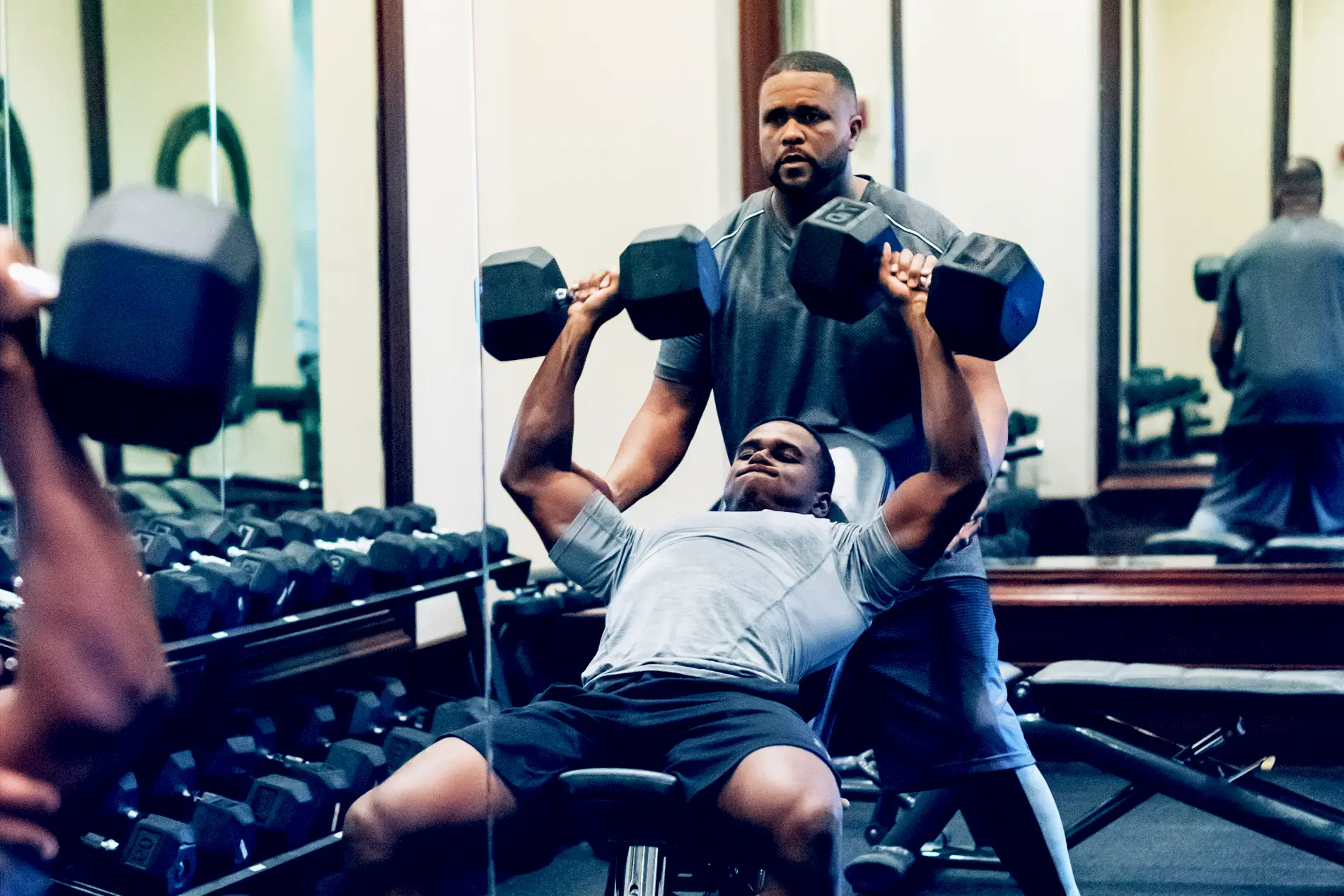
A recent study showed that strength and size responses were repeatable in a group of untrained subjects, indicating individuality of training response. Very few non-responders were observed.
Overview
- What did they test? The researchers had untrained men and women complete a 10-week resistance training period, a 10-week detraining period, and then another 10-week training period. They compared strength and size responses between the first training period and the second training period.
- What did they find? Strength and size responses in the two training periods were correlated. While there were some non-responders, none were detected for more than one variable. Inidividuals with the greatest gains had the biggest decreases during the detraining period.
- What does it mean for you? There is likely truth to the idea that people respond differently to resistance training in terms of both size and strength. Some people will have greater responses to training than others. These responses are likely related to both genetics and environment (like diet, sleep, etc.). However, true non-responsiveness (where an individual has almost no gains in both strength and size) is extremely rare. Similarly, very few show extreme responsiveness to training. You should never base responsiveness off a single period of resistance training or a single training outcome, as it can lead to a false interpretation of a person’s overall responsiveness. Also, trainees who adapt quickly will tend to lose adaptations faster. Finally, muscle size tends to decrease faster during detraining as compared to strength.
What’s the Problem?
Purpose
Anecdotally, we’ve all noticed that some people seem to respond better to training than others. Maybe your gym partner seems to grow just by looking at a weight, while you train your ass off only to look more athletic after years of hard training. Certainly, it seems intuitive that people will respond differently to training. We all have different genetics and different environments. These differences in responses are observed in scientific studies. For example, studies have shown changes in muscle size ranging from -11% to +59% on the exact same training program 1 2, and changes in strength ranging from -8 to 250% 2.
These differences in responses arise from three places: measurement error, biological error, and biological variation. Measurement error refers to the variation in measurement that can occur from one person to the next, or even within the same person. For example, let’s say we’re measuring your muscle size via ultrasound. Slight differences in the amount of pressure placed against the skin with the instrument can contribute to differences in measurement. Biological error refers to natural or random variation that can occur within the same person day to day. For example, if I measure your 1-RM today, it may be slightly different when I measure it tomorrow due to a variety of extraneous factors.
It’s the biological variation that we’re interested in, and what we often think of when we start talking about how training responses vary from one person to the next. However, to determine true biological variation, we have to try to factor out both measurement error and biological error, because the latter two factors do contribute to the range of responses we see in studies. To do this, we need research that tracks a group of individuals over a training program, stops their training for a while, then starts the training again. We then look at how repeatable the responses are from the first training program to the second. To measure responsiveness, we have to measure responses that are beyond the error range of whatever measurement technique we’re using (like ultrasound for hypertrophy or 1-RM for strength). This lets us factor out the measurement error. Finally, we need a control group that does not train at all over this time frame. This helps us factor out the biological error, and we’re left with the response due to biological variation.
Finally we now have a study where researchers have done these things. Let’s take a look at what they did, what they found, and what it means to you.
Hypothesis
The researchers hypothesized that there would be variation in people’s responses to a training program, including some non-responders. They also hypothesized that responses in an initial training period would be reproducible in an identical second training period. Finally, they hypothesized there would be differences in responsiveness during the detraining phase between the two training periods.
What Did They Test and How?
If you would like to continue reading...
New from Biolayne
Reps: A Biolayne Research Review
Only $12.99 per month
- Stay up to date with monthly reviews of the latest nutrition and exercise research translated into articles that are easy for anyone to understand.
- Receive a free copy of How To Read Research, A Biolayne Guide
- Learn the facts from simplified research
About the author

James Krieger
James has a Master's degree in Nutrition and a second Master's degree in Exercise Science He has published research in prestigious scientific journals, including the American Journal of Clinical Nutrition and the Journal of Applied Physiology, and has collaborated with notable scientists in the field like Dr. Brad Schoenfeld. He’s the former science editor for...[Continue]
More From James