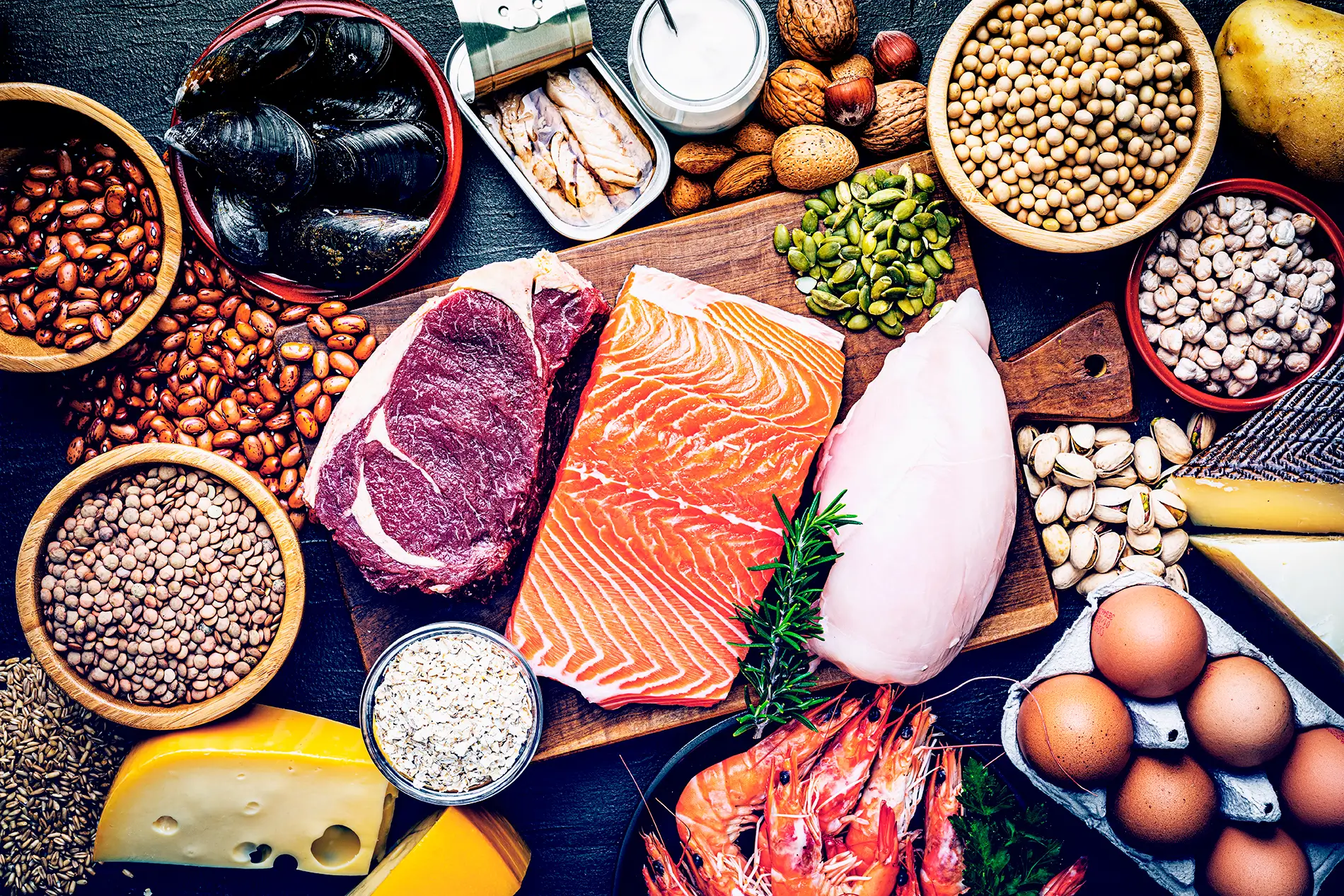
FROM THE STUDY
Protein is associated with improved lean mass In individuals attempting weight loss.
Overview
- What did they test? Researchers examined the relationship between protein intake, physical activity, and body composition in individuals attempting weight loss.
- What did they find? Average protein intake among participants in the study was under 1 g/kg/bw, and only 25% of the study population consumed more than 1.2 g/kg/bw of protein. Higher protein intake was associated with lower body fat percentage, lower BMI, and higher muscle mass.
- What does it mean for you? Protein intake is often promoted for building muscle and improving metabolic health. However, some people argue that the general population is eating enough protein and the recommendations to increase protein intake beyond current levels are excessive.
This study showed that individuals in a real-world setting who are attempting weight loss are, on average, eating less than ideal amounts of protein, and a higher protein intake is associated with improved body composition, lower body fat, and improved muscle mass.
What’s the Problem?
Losing and maintaining body fat loss in the real world is challenging, and most people fail with long-term weight loss maintenance 1. One strategy that is often promoted for weight loss is increasing protein intake, which has shown to be beneficial in numerous controlled intervention studies 2.
However, there has also been criticism against the promotion of higher protein intakes, as this has been deemed to be potentially unnecessary in the general population 3. There is currently a lack of research examining the role of protein intake on body composition among individuals attempting to lose weight in a real-world setting.
Purpose
Higher protein intakes have been shown to improve weight loss and body composition in controlled settings, but there is a lack of data on the utility of higher protein intake and weight loss among individuals trying to lose weight in the real world outside of controlled settings.
Therefore, the purpose of this study was to determine protein consumption habits of individuals who are attempting to lose weight, and also look at the relationship between protein intake and weight loss and body composition among these individuals.
Hypothesis
The authors hypothesized that higher protein intake and higher physical activity would be associated with lower fat mass and increased muscle mass.
If you would like to continue reading...
New from Biolayne
Reps: A Biolayne Research Review
Only $12.99 per month
- Stay up to date with monthly reviews of the latest nutrition and exercise research translated into articles that are easy for anyone to understand.
- Receive a free copy of How To Read Research, A Biolayne Guide
- Learn the facts from simplified research
About the author

Adrian Chavez
Adrian has a Master's degree in Exercise Science and a Ph. D. in Nutrition and Health Promotion from Arizona State University where he specialized in how to apply lifestyle change to improve cardiovascular and metabolic health in diverse populations. After graduating with his Ph. D. he started a coaching business and over nearly a decade...[Continue]
More From Adrian