
FROM THE STUDY
Six weeks of caffeine supplementation enhanced biceps muscle thickness in untrained young men who were not habitual caffeine users. However, the study has significant limitations and this might not happen in other situations.
Overview
- What did they test? The researchers tested the effects of caffeine supplementation at 3 mg/kg versus a placebo containing 3 mg/kg of maltodextrin on muscle thickness, body composition, and strength in untrained young men following a 6-week progressive resistance training program.
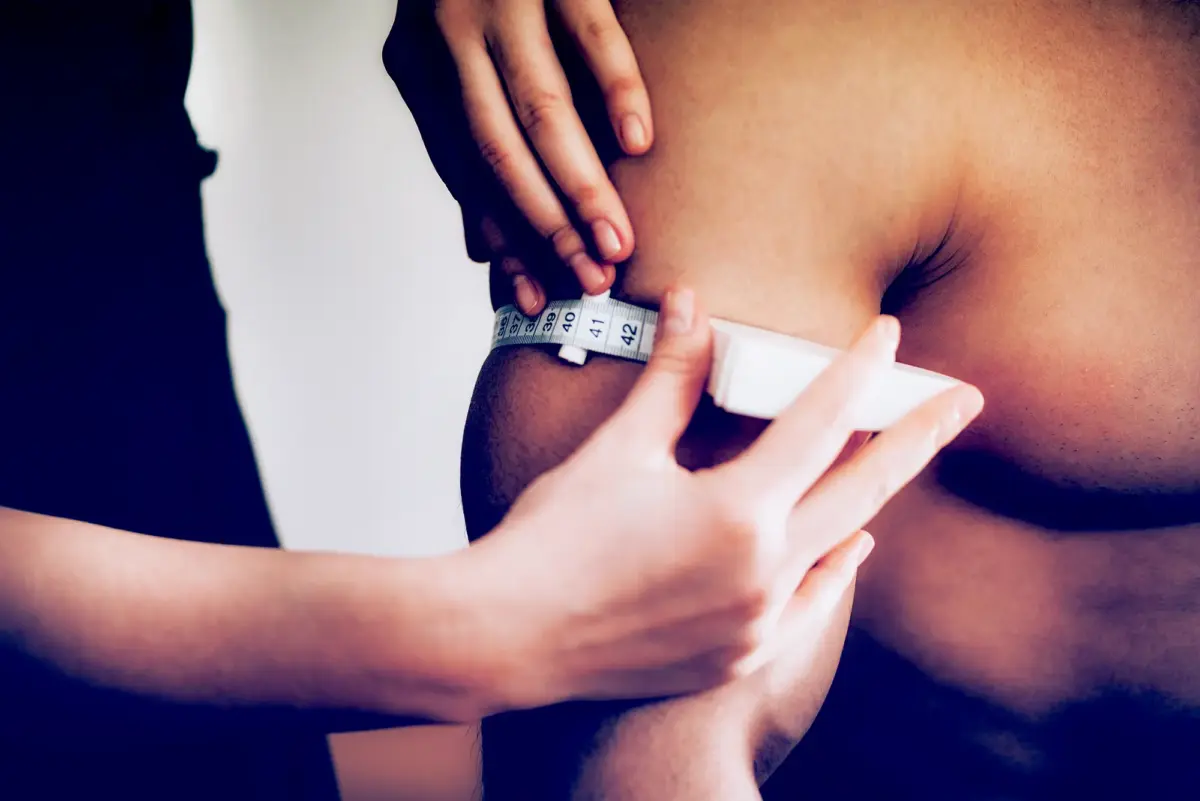
- What did they find? The findings of this study showed that caffeine supplementation did not enhance strength or body composition, but did lead to an increase in biceps muscle thickness in the caffeine supplementation group relative to the placebo and a slightly greater increase in triceps muscle thickness that did not reach statistical significance.
- What does it mean for you? Caffeine supplementation may have a modest benefit for improving muscle growth, at least in untrained young subjects who are not habitual caffeine users. This is a novel finding, and further research is needed to confirm these results. Also, the study has some significant limitations that may indicate the findings are spurious. Nevertheless, caffeine is known to enhance resistance exercise performance, and if you are using it as a pre-workout ergogenic aid, this study suggests there is a possibility of a benefit to hypertrophy.
What’s the Problem?
Caffeine supplementation can be an effective ergogenic aid that can acutely enhance resistance exercise performance 1. In theory, this should translate to improved muscle strength and hypertrophy; however, there is currently a lack of research examining the chronic effects of caffeine supplementation on training adaptations.
One study conducted by Pakulak et al. 2022 2 showed that caffeine had no impact on strength or body composition improvements after 6 weeks of training. This study used resistance-trained subjects and only had 6 participants in the caffeine group and 28 participants overall, which limited the study's ability to detect changes. There is a need for additional research examining the effect of caffeine supplementation on chronic adaptations to resistance exercise.
Purpose
Caffeine supplementation has been shown to enhance acute exercise performance, but it is unclear if these performance improvements will translate to improved strength or body composition outcomes. Therefore, the purpose of this study was to test the effects of 3 mg/kg of caffeine supplementation taken before exercise on strength gains, muscle growth, and body composition among untrained males undergoing a 6-week progressive resistance training program compared to a 3 mg/kg placebo of maltodextrin.
Hypothesis
The authors hypothesized that consuming 3 mg/kg of caffeine before training sessions would improve muscle growth, strength gains, and body composition relative to the placebo group.
What Did They Test and How?
Participants
The study included 28 recreationally active male participants between 18 and 20 years old with less than six months of regular resistance training experience. Participants were excluded if they had prior self-reported use of illicit muscle-enhancing substances or had cardiorespiratory or musculoskeletal conditions that would limit their participation in the exercise training regimen.
Study Procedures
If you would like to continue reading...
New from Biolayne
Reps: A Biolayne Research Review
Only $12.99 per month
- Stay up to date with monthly reviews of the latest nutrition and exercise research translated into articles that are easy for anyone to understand.
- Receive a free copy of How To Read Research, A Biolayne Guide
- Learn the facts from simplified research
About the author
Adrian Chavez
Adrian has a Master's degree in Exercise Science and a Ph. D. in Nutrition and Health Promotion from Arizona State University where he specialized in how to apply lifestyle change to improve cardiovascular and metabolic health in diverse populations. After graduating with his Ph. D. he started a coaching business and over nearly a decade...[Continue]
More From Adrian