FROM THE STUDY
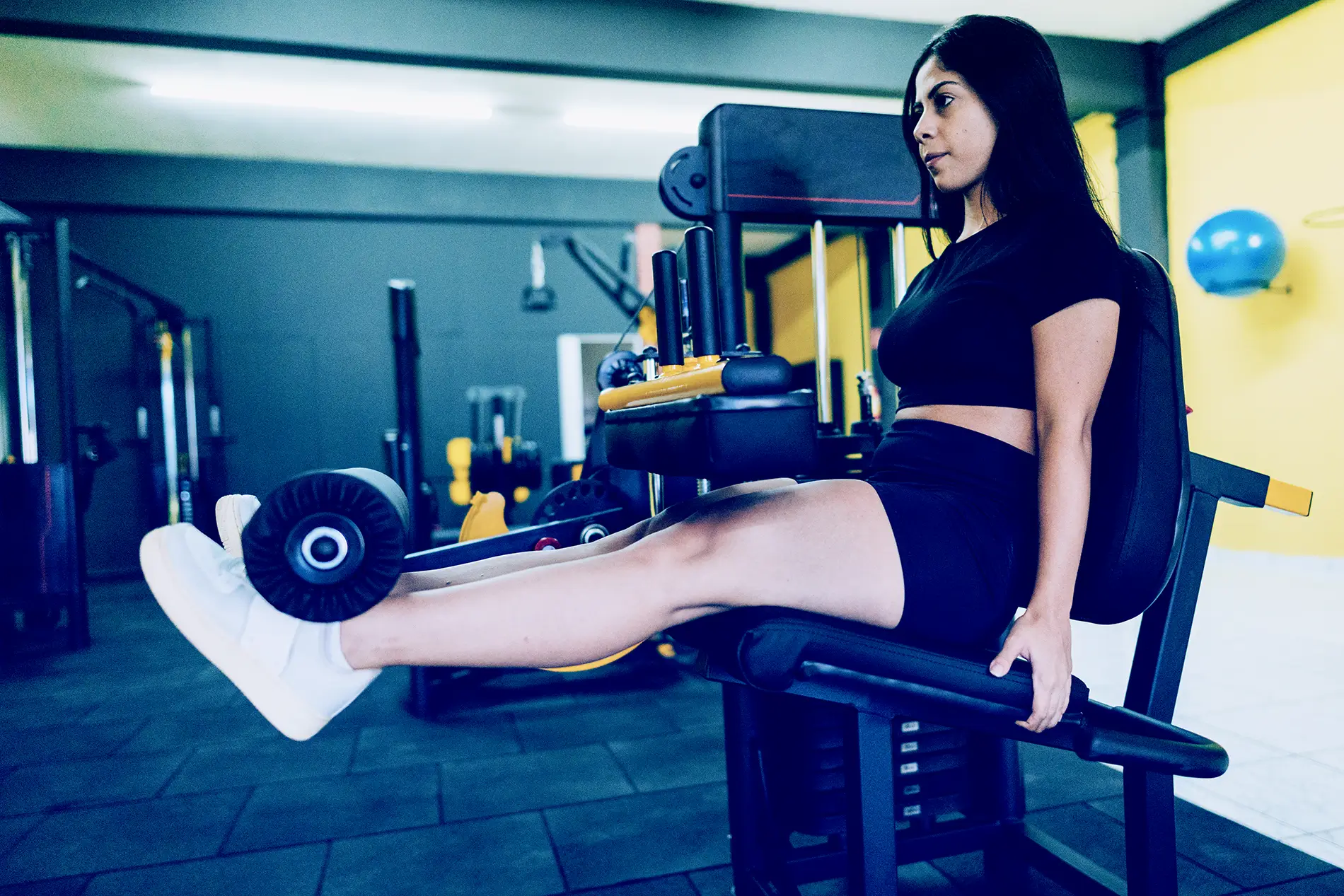
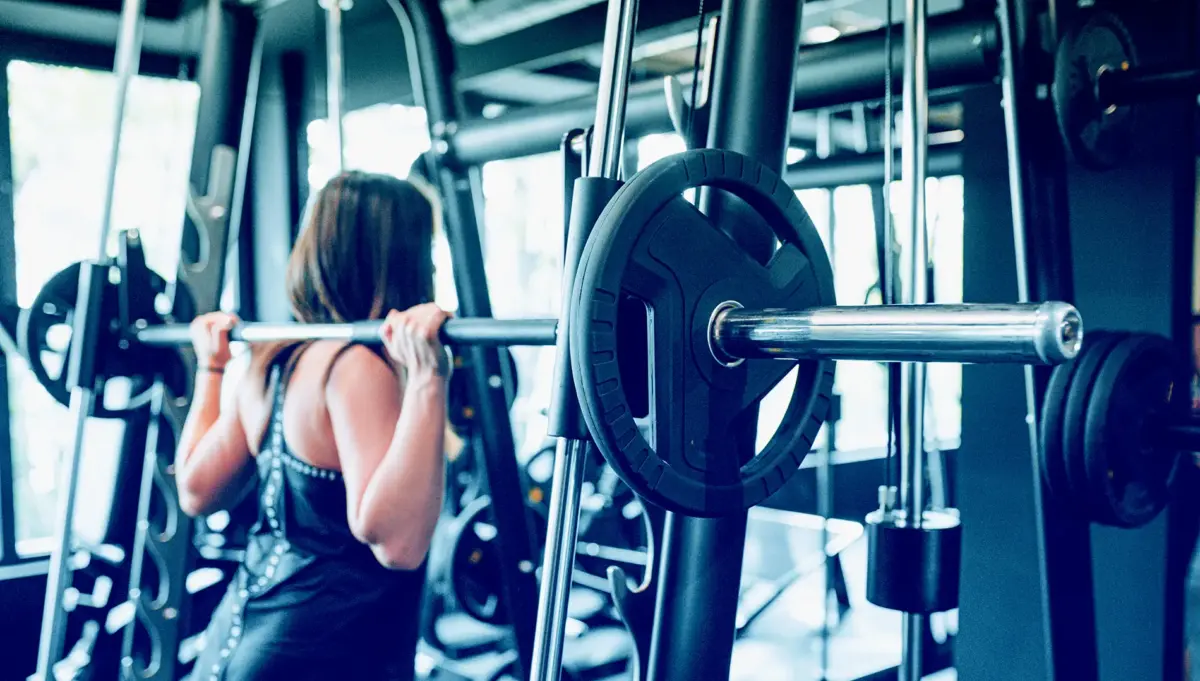
This study had untrained women complete eight weeks of training using either a compound exercise (Smith machine back squat) or an isolation exercise (leg extension) to compare muscle growth and strength outcomes. Leg extension training produced greater rectus femoris growth, while squats favored vastus lateralis hypertrophy and larger improvements in squat strength. As squats improved both squat and leg extension strength, do compound exercises offer greater overall returns?
Overview
- What did they test? Sixty-three untrained women completed eight weeks of resistance training, performing either an isolation or a compound exercise for the quadriceps. Thirty-three participants trained the leg extension, while thirty performed the Smith machine back squat. Changes in muscle growth of two quadriceps muscles (the rectus femoris and vastus lateralis) were assessed using ultrasound, and maximal strength was measured for both exercises.
- What did they find? The leg extension group experienced greater muscle growth across all three rectus femoris sites (proximal, middle, and distal), while the Smith machine back squat produced greater hypertrophy at the distal vastus lateralis. In addition, the Smith machine squat led to larger improvements in 3RM squat strength, alongside similar gains in 3RM leg extension strength between groups.
- What does it mean for you? If your goal is quadriceps hypertrophy, exercise selection could be used to emphasize growth in specific regions. If rectus femoris development is a priority, leg extensions may be useful for targeting this muscle, whereas the back squat may better stimulate vastus lateralis growth. For strength outcomes, more complex movements may provide greater task-specific improvements and better transfer to related exercises.
What’s the Problem?
In my December 2025 article, we covered a study comparing free weights and machines for muscle growth. In that paper by Amanuma et al 1, untrained women performed unilateral leg training, using a single-leg free-weight lunge on one side and a single-leg leg press machine on the other. After nine weeks of training, similar muscle growth was observed in the quadriceps muscles—specifically the rectus femoris and vastus lateralis—between conditions. This suggested that, for hypertrophy, similar movement patterns can produce comparable muscle growth whether performed with free weights or machines.
This month, we turn to a slightly different question: how do compound (multi-joint) exercises compare with isolation (single-joint) exercises for muscle growth and strength? Once again, the focus is the quadriceps, but this time the comparison is between the Smith machine back squat and the leg extension. Let’s take a look at what the researchers did.
Purpose
The study aimed to compare the effects of leg extension and Smith machine back squat training on muscular growth in two quadriceps muscles across three distinct regions of each muscle, alongside exercise-specific strength outcomes.
Hypothesis
The authors hypothesized that leg extension training would result in greater rectus femoris hypertrophy, with no differences in vastus lateralis growth between groups.
They also hypothesized that strength gains would be specific to the exercise performed during training.
If you would like to continue reading...
New from Biolayne
Reps: A Biolayne Research Review
Only $12.99 per month
- Stay up to date with monthly reviews of the latest nutrition and exercise research translated into articles that are easy for anyone to understand.
- Receive a free copy of How To Read Research, A Biolayne Guide
- Learn the facts from simplified research
About the author

Hayden Pritchard
Dr. Hayden Pritchard holds a PhD from the Auckland University of Technology (AUT), his thesis was titled "Tapering Strategies to Enhance Maximal Strength". He has published numerous research articles in international journals, presented at the Australian Strength and Conditioning Associations International Conference, and worked as an academic for around eight years. As an athlete, he...[Continue]
More From Hayden