
FROM THE STUDY
Dieting helps you lose weight, but adding structured exercise helps make sure more of that weight comes from fat instead of muscle.
Overview
- What did they test? The researchers examined whether adding structured exercise to calorie restriction better preserves fat-free mass and skeletal muscle mass compared with calorie restriction alone in adults with overweight or obesity. They also compared whether strength training, endurance training, or mixed training produced different effects.
- What did they find? Adding exercise to calorie restriction significantly preserved fat-free mass compared with dieting alone (+0.87 kg, p < 0.001), but there was no difference between modalities. Exercise also produced slightly greater total body mass loss, but the effect was small. In the network meta-analysis, the authors found that mixed training produced the strongest effects, followed by strength training, and endurance training was not significant.
- What does it mean for you? If you are dieting, especially during a big weight-loss phase, some type of structured exercise should be part of the plan, but it doesn’t seem like there’s a huge difference if it’s strength training or a mix of strength and endurance training.
What’s the Problem?
People have been dieting for decades and in the past few years there has been a surge of new drugs that make weight loss easier. However, with weight loss often comes a reduction in muscle mass, and no one wants to lose their muscle along with the fat.
Chaston et al. previously reviewed studies involving weight loss and found that the method of weight loss, exercise, and aggressiveness of the diet influenced how much fat-free mass (FFM) was lost 1. More severe calorie restriction and faster weight loss were associated with a greater proportion of weight lost as FFM, while exercise appeared to reduce this loss during non-surgical weight loss. More recently, Anyiam et al. showed a similar issue in people with and without type 2 diabetes undergoing very-low-calorie or low-calorie diets. Across 49 studies, roughly one-quarter of the weight lost came from muscle mass 2. The rule-of-thumb in obesity research is that a quarter of weight loss will come from lean mass.
Luckily, exercise has been repeatedly shown to help counteract muscle loss while dieting. Sardeli et al. found that adding resistance training to calorie restriction (CR) in older adults with obesity reduced 93.5% of the lean body mass loss that occurred with calorie restriction alone, without meaningfully impairing weight or fat loss 3. Similarly, Wood et al. found that progressive resistance exercise helped preserve FFM during weight loss in older men with metabolic syndrome 4. Together, these studies suggest that exercise, especially resistance training, can improve the quality of weight loss by helping people lose more fat and less lean tissue.
Only one recent study, which the authors conveniently forgot to mention or cite, has examined this question using a meta-analysis. Xie et al. analyzed 62 randomized controlled trials with 4,429 healthy participants and compared calorie restriction alone against calorie restriction combined with different exercise types 5. Their results suggested that aerobic exercise ranked best for total weight and fat loss, while resistance training and moderate-intensity mixed training ranked better for preserving lean body mass.
Purpose
The primary aim of this systematic review and meta-analysis was to evaluate the effectiveness of preserving FFM during CR in people with overweight/obesity.
Hypothesis
The authors did not state a hypothesis, but indirectly suggest that exercise will prevent some of FFM lost with CR.
What Did They Test and How?
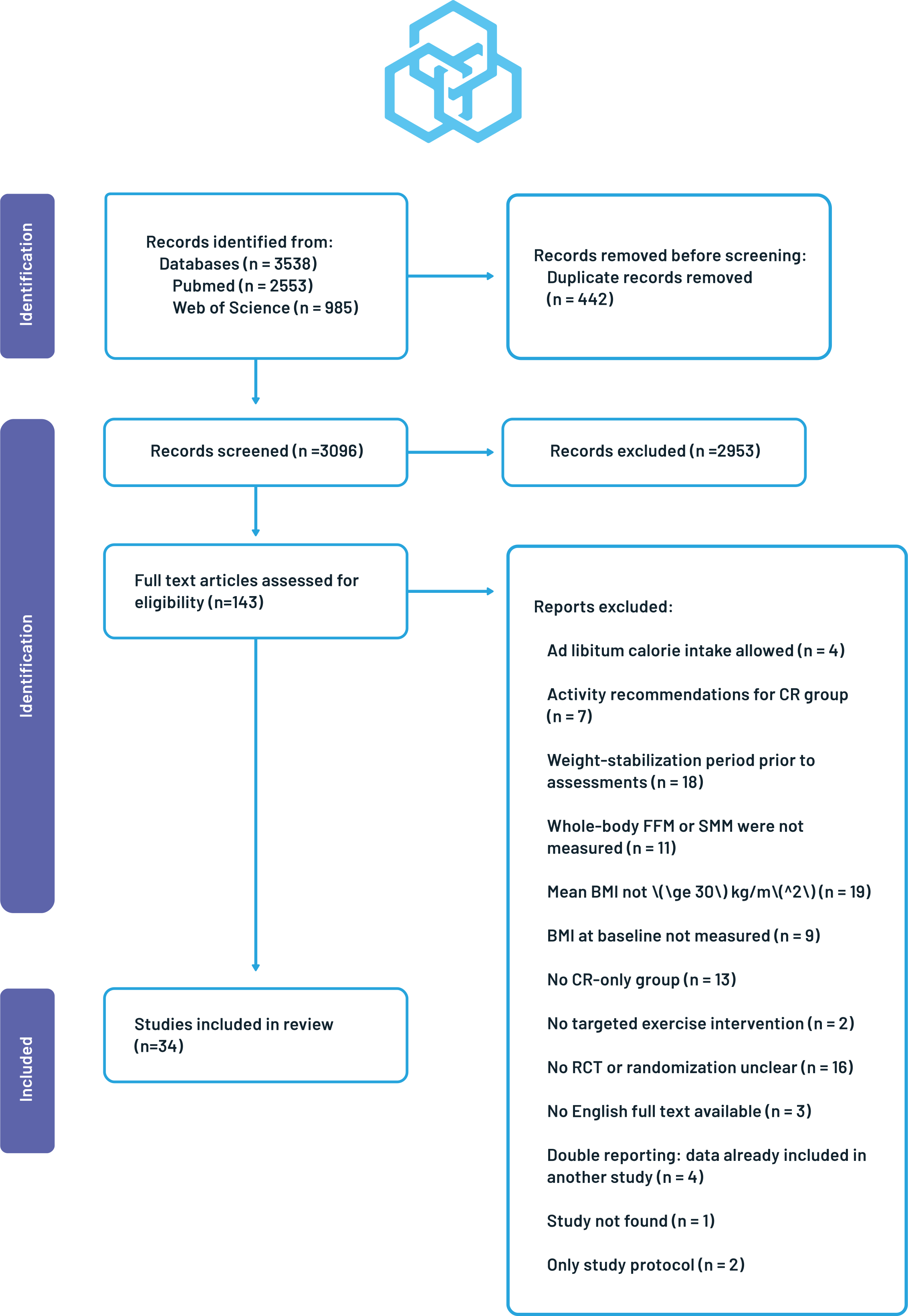
This review was registered in PROSPERO (CRD420251058428). A literature search was conducted using PubMed and Web of Science databases.
Figure 1. PRISMA flow chart
If you would like to continue reading...
New from Biolayne
Reps: A Biolayne Research Review
Only $12.99 per month
- Stay up to date with monthly reviews of the latest nutrition and exercise research translated into articles that are easy for anyone to understand.
- Receive a free copy of How To Read Research, A Biolayne Guide
- Learn the facts from simplified research
About the author
Brandon Roberts
Brandon Roberts serves as the Chief Science Officer at Tailored Coaching Method. He has a PhD in Muscle Biology, an MS in Human Performance, and a BS in Molecular Biology, along with over a decade of experience as a strength coach. He completed a prestigious NIH postdoctoral fellowship in Exercise Medicine and Nutrition at the...[Continue]
More From Brandon